

Gentle everyday care does not require a complicated schedule or a cupboard full of expensive products. It begins simply by noticing how your baby responds and adjusting with patience. A yawn, turning away, fussing, or relaxing in your arms offer clues about whether your little one needs rest, a feed, a diaper change, or just a quieter moment.
Taking time to observe these subtle signals helps caregivers respond thoughtfully rather than relying on a rigid routine. Simple, calm steps make ordinary moments—like dressing, bathing, and settling down—feel comfortable for everyone.
1. Simple routines for bathing and comfort
For bathing and changing, choose products made specifically for delicate skin and use them sparingly. Fragrance-free options often suit sensitive skin best, but individual needs differ. Stop using anything that causes irritation and seek guidance from a health professional.
Keep the room comfortably warm, avoid drafts, and prepare towels and clothing before you begin so your baby isn’t left waiting undressed. Care is also found in a familiar voice, a gentle touch, and unhurried transitions—a few minutes of cuddling after a change can help a baby settle into the rest of their day.
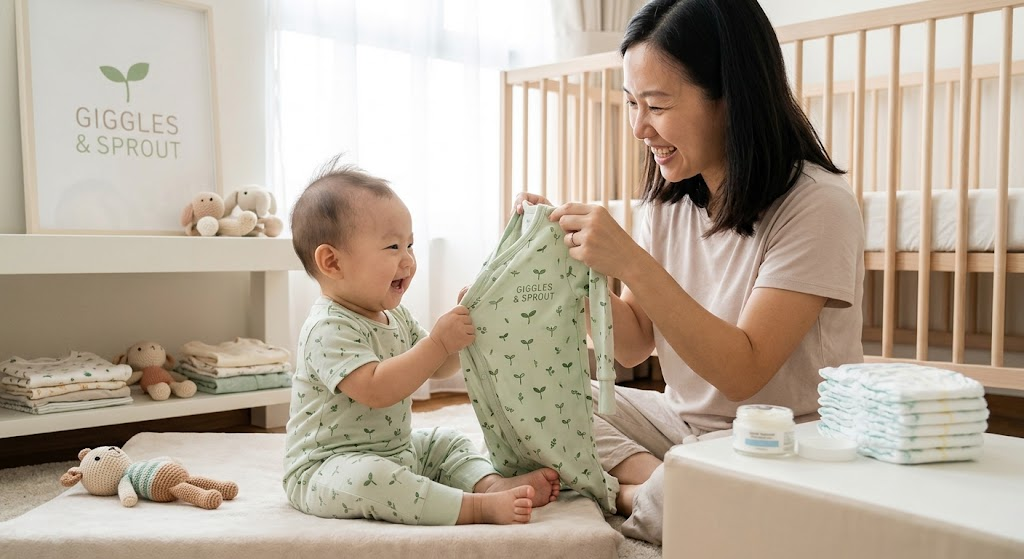
2. Choosing breathable, comfortable baby clothes
Comfortable baby clothes begin with soft, breathable fabrics that feel gentle against delicate skin and allow excess heat to escape. Lightweight cotton and breathable materials work well for everyday wear.
Check the inside of each garment for rough seams, scratchy decorations, and prominent tags (removing them if they irritate the skin). Fasteners should stay secure without pressing, pinching, or rubbing. Snaps and zippers make dressing simpler, but ensure zipper guards cover the pull so closures don’t sit uncomfortably against your baby’s skin.
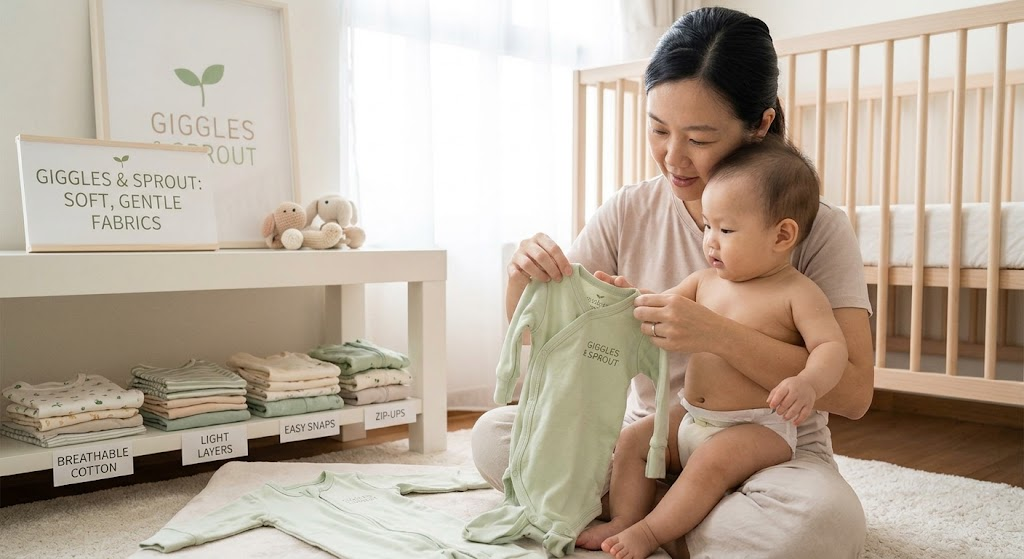
3. Dressing for ease, play, and changing
For newborns, choose straightforward outfits with wide neck openings and easy access to the diaper area. Front-opening bodysuits, gowns, and sleepers reduce the need to pull clothing over a baby’s head.
For active babies who are kicking, rolling, and crawling, ensure there is room to move without excess fabric that can bunch up. Outfits with crotch snaps or two-way zippers make diaper changes vastly more convenient. Always check that elastic waistbands and cuffs are gentle rather than tight, and change damp or soiled clothing promptly to keep skin dry.

4. Smart layering and safe sleep practices
Light layers make it easy to adjust clothing as indoor and outdoor temperatures change. A removable cardigan or blanket used while supervising can be far more practical than a heavy outfit; simply remove extra layers indoors if your baby feels warm.
Check their chest or back of the neck to gauge comfort, as hands and feet often feel cooler even when the rest of the body is warm. For sleep, choose well-fitting sleepwear suited to the room temperature without loose parts. If using a wearable blanket, choose one that fits correctly and never covers the head.
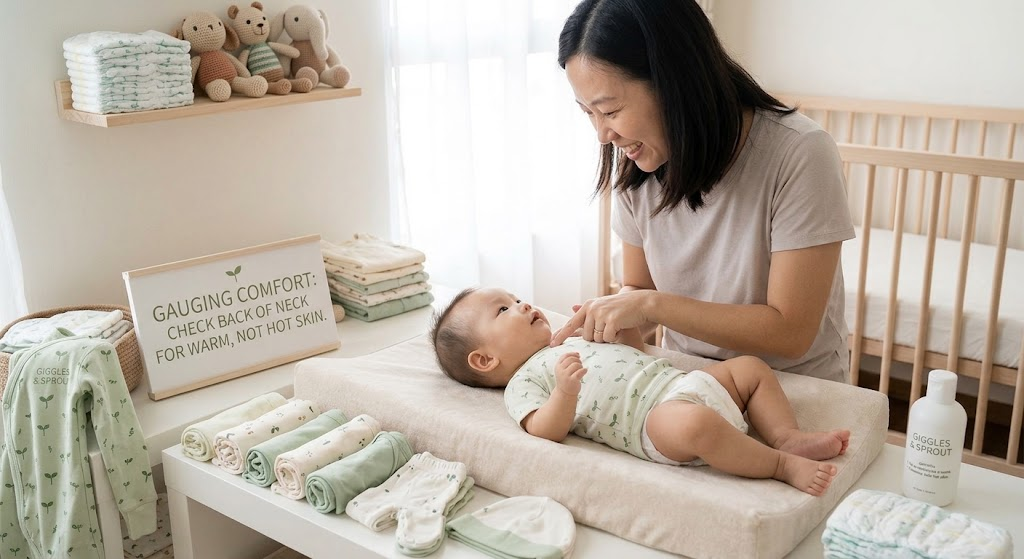
5. Setting up a stress-free changing and dressing station
Everyday care feels much more manageable when supplies are prepared before a task begins. Keep diapers, wipes, and a change of clothes near the changing area, and have a towel within reach before bathing.
These simple preparations reduce interruptions and help you stay focused entirely on your baby. A small basket or tray makes essential supplies easy to find, use, and replenish when convenient.
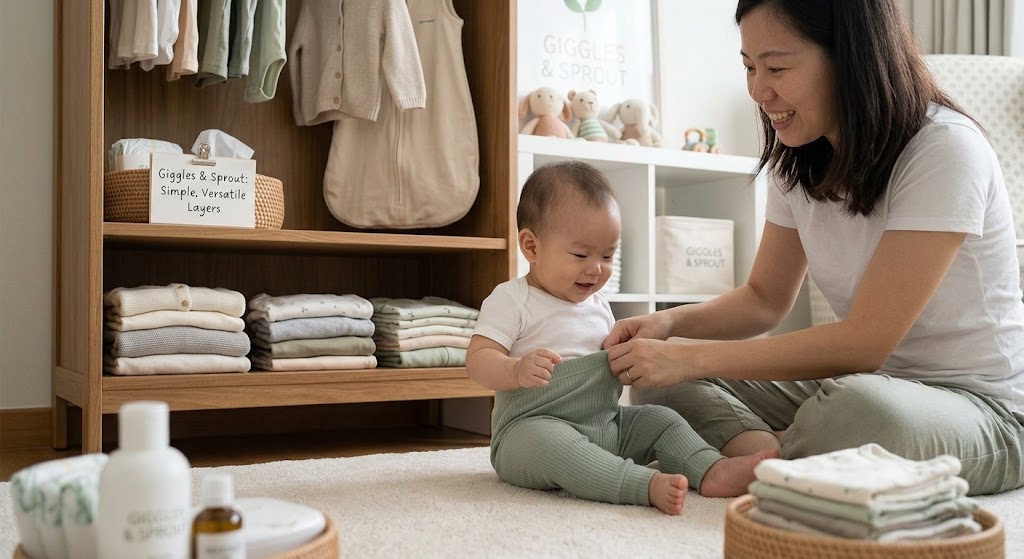
6. Building versatile, low-stress baby wardrobes
Prioritize clothing pieces that work across multiple situations. Simple layers, coordinating basics, and adaptable garments can be mixed and matched as the weather changes.
There is no single right number of outfits to own. Focus on how often your household does laundry, how quickly your baby is growing, and your daily routine. Comfort and practical usefulness matter far more than a perfectly coordinated wardrobe—choose what suits your baby and your budget.
A quick safety & care checklist before you begin
- Never leave baby unattended: Keep one hand close whenever your baby is on an elevated surface like a changing table or near water in a bath. If you forget something, take your baby with you.
- Follow safe sleep guidance: Always place babies on their backs on a firm, flat sleep surface. Keep loose blankets, pillows, soft toys, and safe-sleep hazards out of the sleep space.
- Launder with care: Wash new garments according to their care labels using a gentle detergent. Rinse thoroughly to remove residue, and treat stains promptly without harsh scrubbing before applying dryer heat.
- Pace your day: Allow extra time for daily tasks. A loose sequence of familiar activities provides continuity without making your day feel rigid or rushed.
Everyday care is not about getting each moment perfect—it is about offering attentive, steady support and learning what helps your baby feel safe, comfortable, and at ease.
Sources & further reading
- American Academy of Pediatrics: Safe Sleep Guidelines & Toy Safety
- HealthHub Singapore: Everyday Baby Care & Infant Skin Guidance
- US Consumer Product Safety Commission (CPSC): Infant Sleep & Garment Safety Standards